1

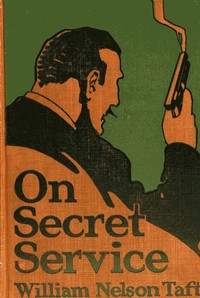
On Secret Service Detective-Mystery Stories Based on Real Cases Solved by Government Agents — Inside the Classic
1257
2
Project Gutenberg
2011
Detective and mystery stories, American; Short stories, American; Secret service -- United States -- Fiction
Readers of public-domain and historical texts
Project Gutenberg digital edition
en
Edition facts
Words: 106,923
Reading time: 465 min
Text sections: 10
Source:
Project Gutenberg record #38131
An editorial note examining William Nelson Taft's authorial choices in diction, dialogue, and description across twenty-four stories framed as real Secret Service cases, with attention to the framing narrator, period slang, and the tension between procedural detail and sensationalism.
Editorial Edition Score
4.8/5
★★★★★
★★★★★
Calculated from edition completeness, EPUB availability, text structure and catalogue metadata. Not a user rating.
Edition quality
The twenty-four stories in William Nelson Taft's On Secret Service are presented as inside accounts of real government investigations, narrated by a former operative named Bill Quinn to an unnamed listener in the Willard Hotel lobby. This framing device—a veteran agent recounting solved cases to a civilian—shapes the book's voice: Quinn's dialogue is colloquial and knowing, peppered with phrases like "spill it" and "the dope," while the listener's interjections ("What's the matter?" "Bolshevist?") keep the exposition natural. Taft's descriptions favor concrete details—a "trim, dapper, almost effeminate-looking chap" or a "blurred postmark" under a piece of silk—over abstract analysis, grounding each mystery in tangible clues.
The Framing Narrator and His Audience
Taft establishes a consistent narrative frame: Bill Quinn, a former Secret Service agent, tells stories to an unnamed companion in Washington's Willard Hotel. This device allows Taft to blend procedural exposition with conversational asides. Quinn's speech is marked by understatement and insider jargon—"It's scarcely the province of a Secret Service man to impress his face upon everyone"—while the listener's questions ("What's the significance of that white mouse on the mantelpiece?") prompt Quinn to elaborate. The frame creates a sense of authenticity, as if the reader is overhearing a debriefing. Taft avoids omniscient narration; instead, Quinn's knowledge is limited to what he learned on the job, and he occasionally admits uncertainty, as when he says "No one appears to know what Fowler's real name is." This restraint lends credibility to the tales, even when the plots strain plausibility.
Period Diction and Slang
The language of On Secret Service is saturated with early-1920s American idiom. Characters are "stung" by frauds, criminals "get away with" goods, and agents "hop to it" on assignments. Taft uses terms like "bankruptcy sharks," "the dope" (for information), and "Peacock Alley" (the Willard Hotel's promenade) to anchor the stories in their era. Dialogue often carries a clipped, masculine tone: Quinn mutters "Hello!" under his breath, and the chief tells Preston, "Here's a case I know you'll like." The slang is not merely decorative; it signals insider status. When Quinn says a suspect "traveled under a whole flock of aliases which ran the gamut of the alphabet from Andrews to Zachary," the hyperbole is both folksy and precise. Taft's word choices—"trim," "dapper," "effeminate-looking"—reveal period attitudes toward appearance and character, linking physical description to moral judgment.
Description as Clue and Atmosphere
Taft's descriptive passages serve dual purposes: they establish setting and plant clues. The opening scene in the Willard lobby—"the constant stream of politicians, pretty women, and petty office seekers"—immediately situates the stories in a world of transients and secrets. Later, a mantelpiece display includes "a piece of silk which figured in one of the boldest smuggling cases" and a "white mouse" that "has a story." These objects are not mere decoration; they are evidence waiting to be explained. Taft often describes people through their effects: a suspect is "trim, dapper, almost effeminate-looking," while an operative is summoned by a buzzer. The physical environment—hotel lobbies, postmarks, envelopes full of evidence—is rendered in functional detail. Even the transcriber's note about missing quotation marks after thought breaks hints at the text's own material history, mirroring the stories' focus on overlooked details.
Procedural Structure and Pacing
Each story follows a recognizable pattern: a crime is reported, an agent is assigned, and the investigation proceeds through legwork and deduction. Taft emphasizes routine—"right in the line of routine"—and the mundane aspects of detective work: traveling by train, examining envelopes, interviewing witnesses. The pacing is brisk, with scenes often ending on a note of anticipation, as when Quinn says "I don't suppose it would do any harm to spill it." Taft uses ellipses and dashes to create a conversational rhythm, and he frequently breaks the narrative with Quinn's asides. The cases are solved not by brilliant leaps but by methodical accumulation of evidence—a "blurred postmark" or a list of names. This procedural focus distinguishes the book from purely sensational fiction, though Taft occasionally indulges in melodramatic touches, such as a "million-dollar quarter" or "five inches of death." The tension between routine and excitement is central to the book's appeal.
Readers approaching On Secret Service should attend to the interplay between Quinn's casual storytelling and the formal structure of the cases. Taft's authorial choices—the framing device, period slang, and descriptive economy—create a hybrid work that is part procedural manual, part yarn. The stories reward attention to small details: a postmark, a piece of silk, a white mouse. Because the excerpts are incomplete, the reader must infer the full arc of each case from the opening moves. The book is best enjoyed as a series of self-contained puzzles, each anchored by a distinctive clue and a narrator who knows more than he lets on.
Reader reflection
What was your reading experience?
Capture what you thought, learned, and would like to remember.
Your progress
0
/
10
2
Was reading this book enjoyable?
3
How likely are you to recommend this book?
4
Did the language feel accessible?
5
How did the pace of the book feel?
6
Would a second reading be valuable?
7
How personally connected did you feel to the book?
8
Did you gain anything practical from the text?
9
What is the main idea you are taking away?
10