1

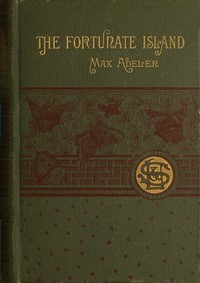
The Fortunate Island, and Other Stories — Key Ideas to Explore
17
2
Project Gutenberg
2019
Short stories, American; Shipwrecks -- Fiction; Castaways -- Fiction
Readers of public-domain and historical texts
Project Gutenberg digital edition
en
Edition facts
Words: 74,318
Reading time: 324 min
Text sections: 18
Source:
Project Gutenberg record #60632
Five stories by Max Adeler (Charles Heber Clark) blend satire, shipwreck, and legal farce. The title tale follows a professor and his daughter stranded on a utopian island; others skewer courtroom antics and human folly with deadpan humor.
Editorial Edition Score
4.8/5
★★★★★
★★★★★
Calculated from edition completeness, EPUB availability, text structure and catalogue metadata. Not a user rating.
Edition quality
The title story opens with a shipwreck that separates Professor E. L. Baffin and his daughter Matilda from the rest of the crew. They escape on a patent india-rubber life-raft, lashed to their luggage, while the Morning Star sinks. The raft’s cargo includes scientific implements from the Wingohocking University, hinting at the professor’s academic ambitions. This precise, almost bureaucratic attention to equipment and patent rights sets a tone of practical absurdity that runs through the collection.
Shipwreck as Setup
The opening chapters of “The Fortunate Island” establish a pattern of disaster followed by meticulous inventory. The professor ties himself and his daughter to trunks, securing their belongings before cutting the raft adrift. The narrative lingers on the Morning Star settling “deeper and deeper” until it disappears. This methodical description of catastrophe—complete with patent details—creates a contrast between high stakes and low comedy. Later stories shift to other settings, but the same attention to procedural absurdity persists. In “Major Dunwoody’s Leg,” for instance, a legal case unfolds with similar precision, cataloging the behavior of jurors and lawyers as if they were specimens.
Courtroom as Theater
The excerpt from a later story presents a trial where lawyers Mr. Shreek and Mr. Pullock perform outrage for the jury. Mr. Shreek’s closing remarks are so vehement that Mr. Weems believes the breach between counsel is “final and irreparable,” only to see them laughing together moments later. The jury selection deliberately excludes intelligent men, and one juror sleeps through most of the proceedings. Leonie Cowdrick, coached by her lawyer, dabs her eyes with a handkerchief on cue. The narrator notes that the lawyers’ quarrels are the only matters the jury finds important. This satirical treatment of legal theater mirrors the earlier story’s mockery of scientific pretension.
Recurring Images of Tethering
Throughout the excerpts, characters are physically or socially bound. On the raft, the professor and Matilda are tied to trunks; in the courtroom, Leonie is “in training” for effect, and the jury is selected for stupidity. The detective Gunn whispers about a reward, noting that Cowdrick’s friends would give no more money. These images of restraint—ropes, signals, financial limits—recur across stories. They suggest a world where freedom is always compromised by patents, contracts, or social performance. Even the island itself, though called “fortunate,” may prove another form of confinement.
Shifting Registers
The collection moves between genres: from castaway narrative to legal satire to domestic comedy. The preface acknowledges that these tales may be “more instructive” than earlier works, hinting at a moral or critical intent. Yet the tone remains consistently deadpan. The narrator reports absurd events—a sleeping juror, a lawyer’s feigned horror—without overt judgment. This flatness amplifies the satire, allowing readers to infer the ridiculousness. The stories share a structure of escalating absurdity under a veneer of rationality, whether in the professor’s scientific calculations or the court’s procedural rituals.
Readers attentive to structure will notice how each story builds toward a moment where systems—legal, scientific, social—reveal their hollowness. The collection rewards those who track recurring motifs like tethering and performance. Approach these tales as a sequence of experiments in deadpan satire, where the punchline often lies in the gap between stated purpose and actual outcome.
Reader reflection
What did you think of this book?
Answer a few questions and save a private reflection on this device.
Your progress
0
/
10
2
How much did you enjoy the reading experience?
3
Would you pass this book on to a friend?
4
What was the reading difficulty like?
5
What was its emotional impact?
6
How would you describe its reading pace?
7
Did any part of the book feel personally relevant?
8
Was the book what you thought it would be?
9
What did this book teach you most?
10