1

The Ghost in the Red Shirt — Reading Notes
168
2
Project Gutenberg
2022
Short stories; Ghost stories; Man-woman relationships -- Fiction
Readers of public-domain and historical texts
Project Gutenberg digital edition
en
Edition facts
Words: 6,911
Reading time: 31 min
Text sections: 1
Source:
Project Gutenberg record #67319
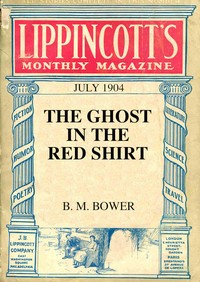
A first-person ghost story framed by a skeptical narrator who admits hoping ghosts were real. The tale moves from a tense lake crossing to a cabin where a silent apparition in a red shirt appears, sitting on a sleeping aunt. The narrator's romantic subplot with Clifford and a lost ruby ring intertwines with the haunting.
Editorial Edition Score
4.3/5
★★★★★
★★★★★
Calculated from edition completeness, EPUB availability, text structure and catalogue metadata. Not a user rating.
Edition quality
The narrator begins by rejecting the conventional ghost-story opening—no protestations of disbelief or claims of truth. Instead, she admits she always hoped ghosts were real, and the story unfolds as a personal account, indifferent to belief. The tale is structured as a framed narrative: a group of six crosses a lake to visit a cave, then shelters in a cabin during a storm. The ghost appears only after the group settles, and its silent, mundane action—sitting on a sleeping aunt—creates a comic-horror effect. The narrator’s voice is colloquial and self-aware, punctuated by asides about her aunt, her ex-fiancé Clifford, and her rival Mabel.
A Lake Crossing and a Storm
The story’s first movement is a journey across a lake in a sailboat named New Woman. The narrator describes the boat as “full of whims,” a phrase that hints at her own capricious tone. The group includes Aunt Jane, Mabel, Cousin Jack, Professor Goldburn, and Clifford Wilton—the narrator’s former fiancé. Tensions surface immediately: the narrator’s hat blows away, Mabel accuses her of showing off, and Aunt Jane takes Mabel’s side. The lake is “smooth as glass and ink black,” a detail that foreshadows the eerie stillness before the ghost appears. When a storm approaches, the sail hangs limp, forcing the men to row. The setting shifts from open water to a cave, then to a cabin, each space more confined than the last.
The Ghost’s Silent Entrance
In the cabin, the group sits around a fire. The ghost is first seen gliding toward an empty chair, its “lustreless eyes fixed upon the fire.” The narrator emphasizes the ghost’s lack of sound: no footsteps, no rustling. The apparition wears a red shirt, a detail that stands out against the dim interior. When the ghost sits down, it does so on Aunt Jane, who remains asleep and merely shivers, saying she feels chilly. The narrator’s horror is undercut by the absurdity of the situation—a ghost perched on a sleeping woman. Jack’s reaction, crying “for God’s sake, move!,” breaks the tension. The scene ends with a gap in the narrative: the narrator faints, and when she revives, the ghost is gone.
Evidence and Aftermath
The narrator offers three pieces of evidence for the ghost’s reality: Clifford’s changed behavior, a red note-book, and the fact that all witnesses saw the same figure—except Aunt Jane, who slept through it, and Mabel, who was “perfectly furious” at being left out. The narrator dismisses the possibility that she dreamed the events, asking rhetorically how that would explain Clifford’s newfound faith in women. The red note-book is mentioned but not described, leaving its contents ambiguous. The story ends with the narrator noting she has another ruby ring, identical to the one Clifford threw into the lake, suggesting a reconciliation. The ghost’s appearance seems to have resolved the romantic subplot, though the mechanism is left unexplained.
Voice and Self-Aware Narration
The narrator’s voice is the story’s most distinctive feature. She interrupts herself, corrects her word choices (e.g., “mad—angry, I mean”), and addresses the reader directly. She refuses to begin with Aunt Jane, then does so anyway. She claims not to care whether the reader believes her, yet she offers evidence. This self-consciousness creates a playful tension between the supernatural events and the narrator’s mundane concerns—her rivalry with Mabel, her dislike of Professor Goldburn, her lingering feelings for Clifford. The ghost itself is almost secondary to the narrator’s personality; it serves as a catalyst for character dynamics rather than a source of sustained dread. The story’s structure mirrors this: the ghost appears briefly, and the aftermath focuses on social fallout.
Readers should attend to the narrator’s unreliability: she admits to hoping ghosts are real, and her account is filtered through her biases against Mabel and the Professor. The ghost’s red shirt and silent movements contrast with the noisy, petty interactions of the living characters. The story rewards attention to its framing devices—the opening rejection of convention, the gap in the narrative after the fainting, and the final claim of a new ruby ring. Bower’s first published short story blends ghost-story tropes with a wry, modern voice that undercuts the very genre it employs.
Reader reflection
What did you think of this book?
Answer a few questions and save a private reflection on this device.
Your progress
0
/
10
2
Did this book hold your interest?
3
Would you pass this book on to a friend?
4
What was the reading difficulty like?
5
Did this book create an emotional response?
6
How clear did the writing feel?
7
How strong was your personal connection to the text?
8
Could you see yourself revisiting this book?
9
Which lesson or insight stayed with you?
10