1

Arctic angels — Background and Themes
2521
2
Project Gutenberg
2024
Short stories; Arctic regions -- Fiction; Royal North West Mounted Police (Canada) -- Fiction; Northwest Territories -- Fiction
Readers of public-domain and historical texts
Project Gutenberg digital edition
en
Edition facts
Words: 6,396
Reading time: 28 min
Text sections: 1
Source:
Project Gutenberg record #73460
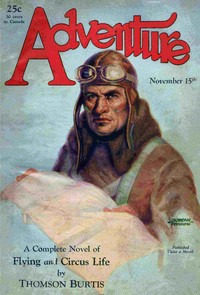
In this 1928 Adventure magazine story, Sergeant Cleaver and Constable Noonan of the Northwest Mounted Police confront trader Scarth's cruelty to huskies and a community crisis in Kannequoq Inlet, where starving Eskimos and a sabotaged skin boat test the limits of duty and ingenuity.
Editorial Edition Score
4.4/5
★★★★★
★★★★★
Calculated from edition completeness, EPUB availability, text structure and catalogue metadata. Not a user rating.
Edition quality
The story opens with a precise sensory tableau: howls echoing off rock walls, huskies tied to red boulders, and Sergeant Cleaver pacing a narrow detachment building. The prose immediately establishes a tension between human authority and animal suffering, as Cleaver mutters about trader Scarth torturing dogs “just for pure devilment.” The setting is not merely scenic—the “thin Arctic air,” “blue white glacier,” and “ice pans tinkling together” frame a world where every detail, from lichen hues to the position of tupiks, carries narrative weight.
Constable Noonan’s apparent laziness—stretched on a bunk, “angelic smile” on his face—contrasts sharply with Cleaver’s coiled frustration. This dynamic, along with the halfbreed’s contemptuous spit and the Eskimos’ stillness, hints at a community bound by unspoken rules and simmering conflicts.
Voice and Verbal Texture
The dialogue and narration carry a distinctive, period-specific energy. Cleaver’s internal monologue is peppered with expletives and self-directed curses: “Rotten! Rotten! Rotten!” he mutters, then later, “Helluva lot you care, you fat lobster!” The sergeant’s voice is impatient, theatrical, and laced with military frustration. Noonan, by contrast, speaks in a thick, comic brogue: “Seventeen dried fish, eleven tins of bully beef, five lumps of tallow, an’ a chunk of pemmican as big as a battleship.” His speech is rhythmic, almost musical, and his actions—sneaking out to feed the starving dogs—reveal a cunning beneath his slothful exterior.
The narrator’s descriptive passages are lean but evocative: “Thin columns of smoke continued to well up undisturbed from the huddle of skin tupiks.” The use of the Inuit term tupik (a skin tent) grounds the story in specific material culture. Action sequences are brisk, with short, punchy sentences: “Whug! Whug!” for blows, and “Cleaver had vaulted from the icy ground with a catlike leap.” The prose favors concrete nouns—mukluks, shingle, pemmican—over abstraction, giving the text a tactile, immediate quality.
Patterns of Contrast and Deception
The story repeatedly sets apparent weakness against hidden strength. Noonan appears inert, even mocked by Cleaver as a “fat lobster,” yet he has secretly executed a plan to feed Scarth’s huskies and prevent them from attacking a skin boat. The “angelic smile” on his sleeping face is a literal misdirection—he is not lazy but strategically dormant. Similarly, the Eskimo community’s stillness is not passivity but a calculated waiting game: they do not intervene in the dogs’ starvation, suggesting a survival logic the Mounties must decipher.
Cleaver himself oscillates between explosive anger and sharp deduction. His initial rant about Scarth gives way to a sudden realization: “Tim had sneaked out and fed Scarth’s starving huskies so that they would not attack the skin boat!” The narrative rewards attention to small details—the walrus on a grounded floe, the halfbreed’s yellow teeth—that later prove crucial. The title “Arctic Angels” itself plays on this contrast: the Mounties are not heavenly beings but rough, pragmatic men performing acts of covert rescue in a harsh environment.
Setting as Active Force
The Arctic environment is not a backdrop but an active participant in the plot. The story opens with “Howls floated out on the thin Arctic air,” and the landscape is described in terms of constraint: “rock-walled Kannequoq Inlet,” “narrow confines of the Mounted Police detachment building.” The seasonal shift is noted with precision—“the brown hillsides were showing red where the lichens were commencing to take on their summer hue”—but this beauty is undercut by the reality of “eight months’ winter” and the supply ship still a month away.
Physical objects carry narrative weight. The “skin boat” is a crucial piece of technology; its destruction would strand the Mounties and prevent their “Arctic angel stuff.” The walrus, shot by Uluk, becomes a resource that Scarth tries to monopolize. Even the dogs’ tethers—“red boulders” and “tethering sticks fastened to their shaggy necks”—are described with care, emphasizing the theme of restraint and liberation. The final image of Noonan surrounded by “four of the satiated huskies” sniffing gratefully at his legs completes a circle: the dogs, once starving and murderous, become allies through a single act of hidden kindness.
Readers should attend to the story’s economy of detail: a walrus, a skin boat, seventeen dried fish. Every element introduced early—the dogs’ howling, Noonan’s apparent sloth, the halfbreed’s contempt—pays off in the final confrontation. The narrative rewards close attention to what is not said, as much as to the vivid, profane dialogue. This is a story where the real action happens in the gaps between Cleaver’s curses and Noonan’s grins.
Reader reflection
How did this book work for you?
Your answers remain private and are stored only in this browser.
Your progress
0
/
10
2
Was reading this book enjoyable?
3
Is this a title you would suggest to others?
4
Did the language feel accessible?
5
Would you read this book again?
6
Did the story or argument move comfortably?
7
Did you gain anything practical from the text?
8
How clear did the writing feel?
9
What changed or sharpened your thinking?
10