1

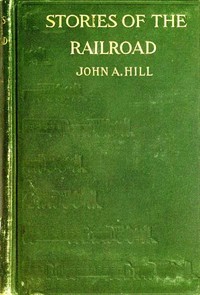
Stories of the Railroad — A Reader’s Guide
376
2
Project Gutenberg
2011
Fiction; Short stories; Railroad stories
Readers of public-domain and historical texts
Project Gutenberg digital edition
en
Edition facts
Words: 53,670
Reading time: 234 min
Text sections: 5
Source:
Project Gutenberg record #37038
John A. Hill's 1899 collection of railroad stories uses a first-person narrator who shifts from youthful fireman to seasoned engineer, capturing the technical jargon, camaraderie, and abrupt tonal shifts of railroading life.
Editorial Edition Score
4.7/5
★★★★★
★★★★★
Calculated from edition completeness, EPUB availability, text structure and catalogue metadata. Not a user rating.
Edition quality
John A. Hill's Stories of the Railroad (1899) opens with a first-person narrator who recalls his days as a young fireman under engineer James Dillon. The voice is immediate and colloquial, drawing the reader into a world where engine parts and operating techniques are named with precision—'Hinkley insider,' 'reverse-lever,' 'injector.' The narrator's affection for Dillon is conveyed through concrete details: Dillon warns him against drink and gambling, offers him room and board, and calls his wife 'mother.' This personal framing, rather than a third-person omniscient view, sets the tone for the collection.
Technical Vernacular and Oral Cadence
The excerpts reveal a narrator who speaks in the rhythms of spoken yarns, not polished prose. Sentences are often long and additive, strung together with dashes and colloquial interjections: 'Why, why, my little girl, trimmest, neatest, slickest little mill you ever saw.' The technical vocabulary—'Joy gear,' 'corrugated firebox,' 'high pressure smoke consumer'—is not explained; it is assumed knowledge, giving the reader a sense of eavesdropping on insiders. This language serves both as authentic period detail and as a marker of the narrator's identity as a working railroader.
Shifts in Pace and Narrative Distance
Hill varies the pace between reflective recollection and rapid-fire dialogue. The opening of 'An Engineer's Christmas Story' moves slowly, establishing Dillon's character and the narrator's gratitude. Later, in the reunion with Gunderson, the prose accelerates into a torrent of exclamations and run-on sentences: 'You ought to seen 'em start out, nary a slip, cutting off square as a die.' The narrator also steps back in time, noting that 'Oscar Gunderson and his little girl became a memory—a page in a book that I had partly read and lost.' These shifts in tempo and distance create a layered sense of time passing.
Character Drawn Through Speech and Gesture
Hill builds characters through distinctive speech patterns and small physical actions. The engineer Gun is introduced by his method of lighting a cigar—'struck a match on the leg of his pants, held both hands around the end of his cigar while he lighted it, then waving the match to put it out.' His dialogue is full of hyperbole and technical enthusiasm: 'the baby is a heart-breaker on dress-parade, and the ten-wheeler is a whale on business.' In contrast, Dillon's speech is measured and paternal. These vocal signatures, combined with recurring motifs like hands on levers or the act of oiling, give each figure a tangible presence.
Readers will find that Hill's stories reward attention to the interplay between technical detail and personal memory. The narrator's voice—sometimes nostalgic, sometimes breathless—invites us to consider how the language of a trade shapes the stories told about it. Because the excerpts are incomplete, the full arc of the collection remains unknown, but the consistent focus on the engineer's perspective and the texture of railroad life offers a coherent entry point.
Reader reflection
Before you leave, reflect on the book
Use these questions to collect your thoughts before moving on.
Your progress
0
/
10
2
What was your overall reaction to the book?
3
Would you encourage someone else to read it?
4
What was the reading difficulty like?
5
Would this book work well in a reading group?
6
What was its emotional impact?
7
How did the reading compare with what you expected?
8
Would you read this book again?
9
What changed or sharpened your thinking?
10