1

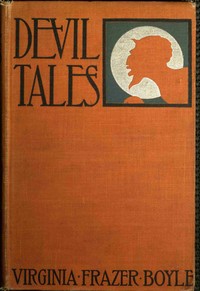
Devil tales — A Reader’s Guide
1350
1
Project Gutenberg
2023
Short stories, American; African Americans -- Fiction; Devil -- Fiction
Readers of public-domain and historical texts
Project Gutenberg digital edition
en
Edition facts
Words: 43,629
Reading time: 190 min
Text sections: 14
Source:
Project Gutenberg record #70436
A collection of fourteen stories in African American dialect, each featuring the Devil in various guises—fly, snake, jack-rabbit, or man—who meddles in the lives of enslaved and newly freed people on Southern plantations. The tales blend folklore, humor, and moral lessons, with recurring motifs of charms, prophesying, and the Devil's cunning.
Editorial Edition Score
4.8/5
★★★★★
★★★★★
Calculated from edition completeness, EPUB availability, text structure and catalogue metadata. Not a user rating.
Edition quality
The Devil appears in many forms in these fourteen dialect tales: a fly that walks on the ceiling, a snake that brings pestilence, a jack-rabbit, or a well-dressed stranger with gold money and a banjo. The stories are set in the Quarters and the Big House, where enslaved and newly freed people contend with the Devil's tricks. The narrator, often an older figure like Unc' Jah, speaks in a dense, rhythmic dialect that conveys both humor and wariness. The Devil's favorite tactic is to exploit human desires—love, pride, or greed—as when a stray nigger tempts a girl with fine clothes and gold earrings, or when a fly overhears secrets. The tales are less about good versus evil than about outsmarting a persistent, shape-shifting adversary.
The Devil's Many Guises
The Devil in these tales is never a single figure. He appears as a fly, a snake, a terrapin, a jack-rabbit, and a man. The fly is especially dangerous because it can go everywhere, even on the ceiling, and see what is hidden. As one character explains, the Devil chooses the most innocent housefly he can find. The snake brings pestilence; the terrapin moves slowly to avoid suspicion. The human Devil is a stranger with a mustache, bear's grease on his hair, and a fine broadcloth coat. He plays the fiddle and banjo, and he chinks gold money in his pocket. Each form gives the Devil a different advantage, and the characters must recognize him despite his disguise.
Charms, Prophesying, and Working
Throughout the stories, characters rely on charms and prophesying to counter the Devil. Unc' Jah, a recurring figure, does his own prophesying and working, often in secret. He sets a charm on a girl who has promised to marry the Devil in disguise. The language of the tales is full of references to working—Unc' Jah is always working on something, whether it is his Mammy's health or a counter-charm. The Devil also prophesies, predicting pestilence or a rain of serpents after the Big Meeting. These practices are presented as everyday skills, not magic. The tension lies in who can out-prophesy and out-work the other.
Movement Between the Quarters and the Big House
The stories move between two worlds: the Quarters, where the enslaved people live, and the Big House, where Ole Miss and Ole Marse reside. The Devil often crosses these boundaries. He appears in the Quarters as a stranger, but he also enters the Big House as a fly. The girl who is tempted by the Devil is a house-nigger who sits and sews by her Ole Miss. The gold earrings and brooch she receives are described as nearly as fine as what Ole Miss wears every day. This movement between spaces highlights the characters' limited mobility and the Devil's ability to go anywhere. The Big House is not safe, nor are the fields.
Dialect as a Narrative Tool
The tales are written in a dense African American dialect that is both a barrier and a strength. The dialect is consistent across stories, with phrases like 'des er-seein'' and 'mighty po'ly.' It gives the narrator a distinct voice and roots the stories in a specific time and place. The dialect also serves a structural purpose: it slows the reader down, forcing attention to each word. The Devil's speech is equally dialectal, making him sound like the other characters. There is no standard English narrator to guide the reader; the stories are told from within the community. This choice makes the tales feel immediate and oral, as if they are being spoken aloud.
These fourteen stories reward a slow reading. The dialect requires patience, but the payoff is in the details: a lizard-like eye, a foot hidden, a fly on the ceiling. The Devil is never named directly in every tale, but his presence is felt in the gold money, the fine clothes, and the promises that sound too good to be true. Readers should watch for the small signs—a stranger who always wants to sit down, a fly that seems too curious—and listen to the characters who keep their own counsel.
Reader reflection
What did you think of this book?
Answer a few questions and save a private reflection on this device.
Your progress
0
/
10
2
How did the book work for you overall?
3
Is this a title you would suggest to others?
4
How easy was the book to follow?
5
How original did the book feel?
6
Could you apply anything you learned?
7
How clear did the writing feel?
8
Did any part of the book feel personally relevant?
9
What changed or sharpened your thinking?
10