1

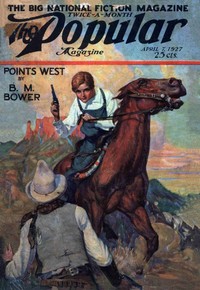
Maurice and the bay mare — Context and Discussion
2562
2
Project Gutenberg
2023
Short stories; Horses -- Fiction; Horsemen and horsewomen -- Fiction
Readers of public-domain and historical texts
Project Gutenberg digital edition
en
Edition facts
Words: 8,176
Reading time: 36 min
Text sections: 1
Source:
Project Gutenberg record #71377
An editorial note examining the narrative voice and shifts in pace in Henry Herbert Knibbs's short story, focusing on the interplay between the groom Maurice's deferential speech and his internal recklessness, revealed through a framed confession.
The story opens with a first-person narrator who is also a character, but the narrative quickly cedes its focal point to Maurice, the groom. The initial description of Maurice—"indecision in the flicker of his bright brown eyes"—establishes a man caught between deference and concern. His speech is marked by a careful, old-country politeness: "I’m begging your pardon for mentioning it." Yet the narrator notes a "quick light" in his eyes when Maurice challenges him to ride the mare. This tension between surface hesitation and inner fire becomes the story's central engine.
Voice and Deference
Maurice's dialogue is the story's most distinctive feature. He speaks in a brogue that Knibbs renders through contractions and syntax: "'Tis plain reckless, and 'tis no credit to a man to be reckless." His address to the narrator shifts between "sir" and a familiar, almost paternal tone. When he calls the mare "ye huzzy," the intimacy of his stable talk contrasts with his formal appeals. The narrator's own voice is more standard, but he records Maurice's words with a fidelity that suggests a listening ear. The effect is a layered narrative: the groom's story is framed by the narrator's observations, but Maurice's voice dominates the second half of the excerpt.
Pace and the Embedded Confession
The story's pace changes markedly when Maurice recounts his accident. The early scenes move with the rhythm of stable work—grooming, tacking up, quiet conversation. But once Maurice begins his tale, the sentences grow longer, more breathless: "I fought him up to the wings, and I tried to hold him straight, him rearing and lunging." The fall itself is rendered in a single, stark sentence: "He went into the corner. He didn’t even try to take off." Then a pause: "They told me he turned over twice. I knew nothing about that." This shift from action to aftermath mirrors Maurice's own loss of consciousness. The pace then slows again as he reflects on pride and judgment, the moral weight of the story settling into a quieter register.
Recurring Details and the Horseman's Code
Knibbs builds the story around small, telling details. Maurice's grooming ritual—"brush and cloth he went over her from muzzle to hoof"—shows a craftsman's pride. The mare's coat "shimmered like sunlight on water," a simile that elevates the ordinary. The hospital scene introduces a counterpoint: the young Irish riding master who brings "a bit of a book to read." This detail, along with the collection taken up by the grooms, underscores a code of mutual aid among stablemen. Maurice's refusal to sue the old man—"I told him it was me own fault"—completes the portrait of a man who values honor over revenge. These recurring motifs of pride, care, and solidarity give the story a texture beyond its plot.
Readers should attend to the way Knibbs uses the frame narrator as a listener, not a commentator. Maurice's story is allowed to stand without moralizing. The shifts in pace—from the deliberate rhythm of stable work to the headlong rush of the jump and back to reflective stillness—are the story's real craft. Notice also how the mare herself remains a cipher; she is never fully characterized, serving instead as a catalyst for Maurice's confession. This restraint is part of the story's quiet power.
Reader reflection
How will you remember this book?
Save your reaction, strongest insight, and memorable passage.
Your progress
0
/
10
2
Did this book hold your interest?
3
Would you pass this book on to a friend?
4
How much effort did this book require?
5
How would you describe its reading pace?
6
Did it raise ideas you would like to talk about?
7
What did you appreciate most?
8
How original did the book feel?
9
What did this book teach you most?
10


![Cover of Some Short Stories [by Henry James] — Inside the Classic](https://cuiep.com/storage/media/covers/pg2327.jpg)