1

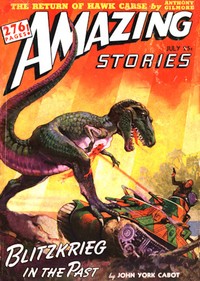
Peter Pettigrew's prisoner — Text and Context
252
5
Project Gutenberg
2024
Short stories; Fantasy fiction; World War, 1939-1945 -- United States -- Fiction
Readers of public-domain and historical texts
Project Gutenberg digital edition
en
Edition facts
Words: 9,777
Reading time: 43 min
Text sections: 2
Source:
Project Gutenberg record #74328
In this 1942 fantasy, air-raid warden Peter Pettigrew captures the Sandman, Ole Luk Oie, only to face Nazi saboteurs. The story shifts between daydreams, lecture-hall reality, and supernatural confrontation, using recurring dust and sleep motifs.
The story opens inside a daydream: Peter Pettigrew, a student Air Warden, imagines himself confronting a Nazi spy, only to be yanked back to a lecture hall where Sergeant McCurdle is drilling the class on bomb defense. This abrupt transition from fantasy to mundane reality sets the pattern for the entire tale. The narrative repeatedly moves between Peter’s vivid inner world—populated by heroic gestures—and the drab, humiliating present of training exercises. The Sandman’s later appearance blurs these boundaries further, making the reader question what is real.
The Structure of Interruption
The story’s structure relies on sudden interruptions. Peter’s heroic daydream is popped “like a penny balloon” by McCurdle’s sarcastic voice. Later, when Peter confronts the Sandman, a Nazi squad bursts in with a sharp “Achtung!” Each shift undercuts the previous scene’s authority. The pattern suggests that no single reality—whether fantasy, training, or supernatural encounter—holds stable control. The narrative moves in jerks, not smooth transitions, mirroring Peter’s own lack of focus.
Dust, Sand, and Sleep as Recurring Images
Dust and sand appear at key moments. The opening line has a man throwing “a handful of dust” into Pettigrew’s face. The Sandman carries a bag of “dream-sands” meant to put mortals to sleep. Peter later calls these sands an “anaesthetic” weapon. The substance shifts from a nuisance to a magical tool to a military prize. Sleep itself is treated ambivalently: Peter dozes off in class, the Sandman induces slumber, and the Nazis aim to exploit the sands. The imagery ties together the mundane and the mythical.
Movement Between Worlds
The story moves between three distinct settings: the lecture hall, Peter’s imagination, and the supernatural realm implied by the Sandman. Each has its own rules. In the lecture hall, McCurdle piles on hypothetical disasters. In Peter’s daydream, he is a bold hero. When the Sandman appears, the rules of physics and visibility shift—Peter can see him only because of special glasses. The Nazis then reassert a gritty wartime reality. This constant movement keeps the reader off balance, never settling in one mode for long.
Voice and Dialogue as Characterization
Peter’s voice is apologetic and uncertain (“Y-yes, sir!”), while McCurdle’s is acid and mocking. The Sandman speaks with testy impatience, using colloquialisms like “jerk” and “gag.” The Nazis bark orders in German-accented English. Each character’s speech pattern reinforces their role: Peter the bumbler, McCurdle the drill sergeant, the Sandman the annoyed immortal, the Nazis as faceless threats. The dialogue carries much of the story’s humor and tension, especially in the Sandman’s deadpan explanations of his invisibility.
Readers should pay attention to how the story uses its short length to juggle multiple tones—comic, suspenseful, and fantastical—without fully committing to any. The excerpts leave unresolved whether the Sandman is real or a product of Peter’s overactive imagination. The ending is not included here, but the pattern of interruptions suggests that any resolution will be as unstable as the scenes that precede it.
Reader reflection
How did this book work for you?
Your answers remain private and are stored only in this browser.
Your progress
0
/
10
2
Did this book hold your interest?
3
How likely are you to recommend this book?
4
How much effort did this book require?
5
Did the story or argument move comfortably?
6
How closely did the book connect with your experience?
7
How well did it match your expectations?
8
Did you gain anything practical from the text?
9
What did this book teach you most?
10


![Cover of Some Short Stories [by Henry James] — Inside the Classic](https://cuiep.com/storage/media/covers/pg2327.jpg)