1

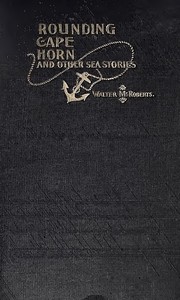
Rounding Cape Horn, and Other Sea Stories — A Reader’s Guide
1577
6
Project Gutenberg
2017
Fiction; Short stories; Sea stories
Readers of public-domain and historical texts
Project Gutenberg digital edition
en
Edition facts
Words: 55,719
Reading time: 243 min
Text sections: 6
Source:
Project Gutenberg record #55408
Ten sea stories from 1895, including a life-saving station during a nor'easter and a comedic equator-crossing with a cross-dressed mermaid, revealing a tension between heroic adventure and farcical domesticity.
The opening story, “The Life-Savers,” establishes a grim tone with a detailed description of a March nor’easter on the New England coast. The surf is a “turbid yellowish froth” with the consistency of beaten egg white, and the undertow drags pebbles that produce a “peculiar musical roar.” This sensory precision contrasts sharply with the later story “Crossing the Line,” where Captain Pitkin steals his sister’s red dressing jacket and green veil to outfit a male crew member as a mermaid. The catalog subjects—Adventure & Picaresque Fiction and Sea stories—accurately reflect the maritime setting, but the excerpts show that the book’s tonal range is wider than pure adventure, veering into domestic farce and character comedy.
A Nor’easter’s Texture
The first story’s opening paragraph is a masterclass in atmospheric detail. The foam is not merely white but “turbid yellowish froth,” and the wind drives it inland alongside “pelting snow.” The beach is littered with “sea-weed, drift-wood, bottles, dead crabs.” This accumulation of specific debris grounds the scene in a tactile reality. The patrolmen struggle with “only their beach lanterns for company,” and the blackness at sea is “almost tangible.” These details are not generic; they evoke a particular kind of coastal storm. The narrator compares the life-savers to “Spartan heroes,” but the evidence of the prose is more interested in the physical texture of the storm than in heroic rhetoric. The description of the undertow’s “peculiar musical roar” suggests an ear for the sounds of the sea as much as its sights.
Cross-Dressing and Comedy on the Equator
“Crossing the Line” shifts abruptly from peril to parody. Captain Pitkin, inspired by a song about a mermaid, decides to stage the traditional equator-crossing ceremony. He recruits a carpenter named Fritz to play King Neptune—chosen because he is “large and massive” with a long beard—and a crewman named Mike to play the mermaid. The captain steals his sister Rose’s clothes: an old black alpaca skirt, a red dressing jacket “for which she cared a great deal,” and a green veil to “make Mike look mysterious.” The comedy derives from the captain’s guilt (“he felt rather guilty”) and his pragmatic theft while Rose is distracted scolding the steward. The narrative treats the cross-dressing as a practical joke rather than a transgression, and the humor relies on the incongruity of a tanned, bold-featured man in women’s clothing. This story’s tone—light, farcical, domestic—is a deliberate counterpoint to the life-saving drama.
The Dedication and the Index as Paratexts
The book is dedicated to “J. MURPHY, M.D.” by “his friend, THE AUTHOR.” This personal inscription suggests a readership of acquaintances or a local audience, consistent with the book’s publication in Peoria, Illinois, by a small printing company. The index lists ten stories, with titles like “The Life-Savers,” “Thanksgiving on the Dicky Bird,” and “The Monomaniac.” The range of titles hints at variety: some promise action (“Bringing in a Derelict”), others character study (“The Monomaniac”), and one a domestic holiday (“Thanksgiving on the Dicky Bird”). The epigraph from Byron’s “Roll on, thou deep and dark blue ocean” signals a Romantic view of the sea, but the stories themselves, based on the excerpts, oscillate between that sublime vision and a more mundane, even comedic, treatment of life at sea.
Readers approaching this collection should expect neither a uniform tone nor a single narrative style. The excerpts suggest that McRoberts moves between detailed naturalism and broad comedy, sometimes within the same volume. The catalog subject “Sea stories” is accurate but incomplete; the book also contains domestic farce and character sketches. The evidence does not indicate whether the later stories maintain this range or settle into one mode. The index provides a roadmap, but the actual texture of the prose—the yellow foam, the stolen dressing jacket—is what distinguishes this collection from generic maritime fiction.
Reader reflection
What was your reading experience?
Capture what you thought, learned, and would like to remember.
Your progress
0
/
10
2
How did the book work for you overall?
3
Is this a title you would suggest to others?
4
What was the reading difficulty like?
5
How distinctive were its ideas or approach?
6
How strongly did the book affect you emotionally?
7
Would this book work well in a reading group?
8
Which element worked best for you?
9
What is the main idea you are taking away?
10