1

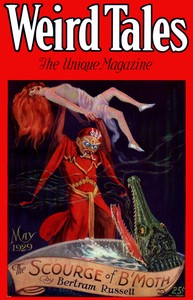
The girl from Samarcand — Reading Notes
1228
1
Project Gutenberg
2024
Short stories; Fantasy fiction; Rugs, Oriental -- Fiction
Readers of public-domain and historical texts
Project Gutenberg digital edition
en
Edition facts
Words: 8,182
Reading time: 36 min
Text sections: 1
Source:
Project Gutenberg record #73463
In E. Hoffmann Price's 1929 fantasy, a New Orleans woman competes with her husband's obsession with antique Oriental rugs, which leads to a supernatural encounter with a girl woven into a Samarcand carpet.
Editorial Edition Score
4.4/5
★★★★★
★★★★★
Calculated from edition completeness, EPUB availability, text structure and catalogue metadata. Not a user rating.
Edition quality
The story opens with a sharp domestic comedy: Diane Clarke, wife of rug collector Hammersmith Clarke, trades banter with a friend about her husband's consuming passion for antique carpets. Diane describes herself as “one lone woman competing with a dozen odd favorites,” and recounts how Clarke once bathed a Bokhara rug in milk to improve its luster. The dialogue is crisp and worldly, set in a New Orleans apartment overlooking Jackson Square. Price establishes the rugs not as mere decor but as rivals, animated by Clarke’s obsessive care. This tension between the mundane and the marvelous sets the stage for the story’s central supernatural event.
Diction of Desire and Enchantment
Price’s prose shifts between two registers: the colloquial, ironic voice of Diane’s social circle and the lush, incantatory language of the supernatural. When Clarke contemplates the Samarcand rug, the narrative swells with phrases like “all the witchery and ecstasy that had ever been lost in the entire world were reassembled, pulsing in the silken pile.” The rug is described as “mysterious and golden, with its pale sapphire corner pieces glittering like a distant sea.” This heightened diction marks the boundary between ordinary reality and the realm of the Yellow Girl. The contrast is deliberate: the opening dialogue’s brittle humor gives way to a hypnotic, almost erotic intensity as the rug’s power asserts itself.
The Yellow Girl’s Voice and the Logic of Reincarnation
The Yellow Girl speaks in a formal, archaic register that sets her apart from the modern characters. She addresses Clarke as “my lord” and explains that she wove her soul into the rug centuries ago, during the time of the Great Khan. Her account of a past life—a prince’s palace, eunuchs with “crescent-bladed simitars,” a bowstring for her and a swordstroke for her lover—is delivered without irony. Price uses her dialogue to introduce a theory of cyclical time: “Before the last time we were born,” she corrects Clarke, implying multiple incarnations. The rug becomes a vessel for memory and desire, a device that collapses temporal distance. The girl’s matter-of-fact tone about her own death (“a bowstring for me”) lends the fantasy a chilling gravity.
Setting as Character: New Orleans and the Imagined East
The story’s geography is precise: the French Quarter, the Pontalba Building, Arnaud’s restaurant. These details anchor the fantastic in a recognizable, modern city. Yet the rug from Samarcand brings with it a vision of the valley of Zarab-shan, a garden by a fountain, and the moonlit interior of a mosque. Price juxtaposes the local and the exotic without resolving the tension. Diane’s jealousy of the rugs is a comic reflection of this cultural collision: she competes with objects that embody a romanticized Orient. The story never leaves New Orleans, but the rug’s power transforms Clarke’s study into a threshold. The setting thus functions as a stage for the conflict between domestic realism and transcendent longing.
Structure and the Unreliable Witness
The narrative is framed by Diane’s perspective in the opening scene, but the supernatural encounter is presented from Clarke’s point of view, without ironic distance. This shift in focalization leaves the reader uncertain: is the Yellow Girl a hallucination, a ghost, or a literal being? Price offers no explanation. The story withholds any return to Diane’s viewpoint after the rug’s magic takes hold, so we never learn how she interprets her husband’s experience. This structural choice reinforces the ambiguity. The excerpts break off before the resolution, but the pattern suggests that the story privileges Clarke’s vision over Diane’s skepticism. The reader is left to weigh the competing claims of the mundane and the marvelous, much as the characters do.
Patterns of Repetition and Ritual
Price uses repetition to build a sense of ritual. Clarke has “spent so many nights and days of staring” at the rug that the encounter feels inevitable. The Yellow Girl’s appearance is preceded by “a faint, oddly accented drumming and piping,” music that resurrects the past. The phrase “Night of Power” invokes Islamic tradition, lending the scene a quasi-religious weight. Even the dialogue echoes: Clarke says, “You are lovelier now than you were then, by that fountain in a garden near Samarcand,” and the girl repeats the phrase back to him, as if confirming a spell. These repetitions create a hypnotic rhythm, mirroring the rug’s power to loop time. The story’s language itself becomes a kind of weaving, binding past and present.
Price’s story rewards attention to its tonal shifts: the opening comedy of manners is not discarded but deepened by the supernatural. Readers may consider how the dialogue’s worldly cynicism prepares for—or contrasts with—the later enchantment. The excerpts leave the outcome unresolved, but the central question is whether Clarke’s obsession leads to liberation or delusion. The story’s brevity (under 9,000 words) invites rereading to trace how Price builds his fantastic premise on a foundation of precise, everyday detail.
Reader reflection
Your personal reading reflection
Build a private reading journal entry for this title.
Your progress
0
/
10
2
Was reading this book enjoyable?
3
Would you pass this book on to a friend?
4
How easy was the book to follow?
5
Would this book work well in a reading group?
6
Which aspect of the book did you value most?
7
How distinctive were its ideas or approach?
8
Did the book meet your expectations?
9
Which lesson or insight stayed with you?
10


![Cover of Some Short Stories [by Henry James] — Inside the Classic](https://cuiep.com/storage/media/covers/pg2327.jpg)